Recruitment Services in Lebanon: A Practical Guide for SMEs
If you run a small or medium-sized business in Lebanon and you are serious about hiring the right people, you need a clear picture of how recruitment actually works in the Lebanese market. It is not a simple process of posting a vacancy and waiting. The structure, expectations, and practical realities of hiring in Lebanon have specific characteristics that directly affect your results, your time, and your budget.
This guide covers what recruitment services in Lebanon actually deliver, the challenges Lebanese SMEs face when hiring, and how to choose and work with the right recruitment partner.
What Recruitment Services in Lebanon Actually Mean
Recruitment services in Lebanon cover the full hiring cycle from talent mapping to onboarding support, but what providers offer and how they work varies widely. For Lebanese SMEs, the most common service models are:
- Contingency recruitment, where agencies get paid when you successfully hire a candidate they introduced
- Retained or exclusive search for senior or specialist roles, usually with a staged fee tied to milestones
- Project hiring for bulk or fast-growth needs, such as building a new department or filling multiple similar roles quickly
- Recruitment process outsourcing, where a provider manages part of your hiring function on your behalf
The stronger firms in Lebanon do more than send CVs. They advise on salary benchmarks, role design, realistic timelines, and how your offer will land with candidates who are comparing you against other local employers, regional opportunities, and remote roles.
When you treat a recruitment service as a strategic partner rather than a transactional CV supplier, you get better candidates, faster hiring, and fewer unpleasant surprises after the offer stage.
The Recruitment Landscape Lebanese SMEs Are Operating In
Lebanon has a deep pool of educated, multilingual professionals across finance, engineering, technology, marketing, operations, and management. At the same time, a significant share of strong candidates are open to remote work or relocation, which means that Lebanese SMEs compete for talent with regional and international employers.
Good candidates in Lebanon are selective. They expect clarity about the role, speed throughout the process, and genuine respect in how they are treated from first contact to final decision. A slow or disorganized hiring process damages your reputation in a market where professional networks are tight, and word travels fast.
Hiring channels in Lebanon include specialized agencies, job portals, referral networks, and direct sourcing through professional communities. A recruitment service that knows which channels produce the right profiles for specific roles, seniority levels, and salary brackets saves you significant trial and error.
Key Challenges Lebanese SMEs Face When Hiring
Most Lebanese SMEs that struggle with recruitment share a set of common, predictable problems. Recognizing them clearly helps you build a process that avoids them.
Finding Qualified Candidates in a Competitive Market
Brain drain is a structural reality in Lebanon. Skilled professionals, particularly in technology, finance, and management, consistently have options abroad that Lebanese employers cannot always match on salary alone. This does not mean strong talent is unavailable. It means you need to compete on factors beyond compensation, including role clarity, career growth, working culture, and management quality.
Recruitment services with active talent networks and strong local market knowledge can reach candidates who are not actively applying to job boards but who are open to the right opportunity. This access to passive candidates is one of the most concrete advantages a professional recruitment partner provides.
Inconsistent Hiring Processes
Many Lebanese SMEs hire reactively. A vacancy appears, someone posts it somewhere, CVs arrive in a mix of emails and messages, and hiring decisions are made informally. This approach consistently produces poor results: weak candidates, long time-to-hire, and early turnover from candidates whose expectations were never properly aligned.
A structured recruitment process, whether managed internally or with a provider, dramatically improves outcomes. That means defined role requirements, consistent screening criteria, clear interview stages, and timely feedback to candidates at every step.
TREX Lebanon supports Lebanese SMEs in building exactly this kind of structure through its HR consultancy services, helping companies design recruitment processes that produce repeatable, reliable hiring results.
Salary Benchmarking in a Volatile Market
Lebanese salary expectations have shifted significantly since 2019. Currency changes, economic pressure, and competition from remote roles have all affected what candidates expect and what employers can realistically offer. Many SMEs either offer too little based on outdated benchmarks or overextend on compensation without understanding what the market actually requires for specific roles.
A recruitment service with current market data helps you position your offer correctly from the start, reducing offer rejections, accelerating decision-making, and building credibility with candidates.
Retention After Hiring
Recruitment is only half the challenge. Retaining good people in Lebanon requires clear onboarding, defined career paths, consistent management quality, and a working environment where employees feel valued and directed. Many Lebanese SMEs invest in hiring but underinvest in the first 90 days of employment, when most early turnover occurs.
Your recruitment partner should help you design onboarding processes that reduce early attrition, not just deliver a signed offer letter and disappear.
Benefits of Working with Professional Recruitment Services in Lebanon
Access to Broader and Better Talent
Professional recruitment services in Lebanon maintain active candidate databases and professional networks built over years of market activity. For specific roles, particularly at the management level or in specialized functions, this network access is the difference between finding two viable candidates and finding twelve.
You benefit from sourcing that goes beyond what a job posting produces, reaching passive candidates who are currently employed but open to the right opportunity.
Faster Time to Hire Without Sacrificing Quality
Experienced recruiters run parallel sourcing, screening, and shortlisting processes, significantly compressing hiring timelines. When a provider already has warm candidate relationships and a structured intake process, your time between role approval and signed offer drops materially.
This matters in Lebanon’s talent market, where strong candidates are often managing multiple processes at once. Speed and clarity in your process directly affect whether the best profiles stay engaged long enough to receive your offer.
Structured Screening That Protects Your Time
The most concrete day-to-day benefit of working with a recruitment service is the quality of the shortlist you receive. A strong provider conducts competency-based interviews, language and communication checks, and capability assessments before you spend a minute of your own time on a candidate.
You stop reviewing random CVs and start meeting a tight shortlist of candidates who have already been qualified against your specific requirements.
Market Intelligence That Improves Your Decisions
Good recruitment providers in Lebanon see the market from a position you cannot replicate internally. They know which roles are hard to fill and why, what competing companies are offering for similar profiles, where salary expectations are shifting, and what candidates are saying about your company in the market.
This intelligence, if your provider shares it openly, helps you make better decisions on role design, compensation, and employer positioning before a single candidate interview.
Core Recruitment Services Lebanese SMEs Should Use
Talent Search and Sourcing
The foundation of any recruitment engagement is active sourcing. For Lebanese SMEs, this should include structured outreach to passive candidates through professional networks, not just posting vacancies and filtering applications. The best profiles rarely apply to job boards. They are identified, contacted, and engaged directly.
Candidate Screening and Shortlisting
A proper screening process for Lebanese SMEs should cover technical competency, language skills relevant to the role, communication style, and realistic alignment with your offer in terms of compensation and working conditions. This screening should be documented and based on criteria you define together with your provider before sourcing begins.
Interview Coordination and Process Management
Your recruitment partner should own the logistics and communication throughout the hiring process: scheduling interviews, briefing candidates before each stage, collecting feedback from your internal team, and keeping candidates updated with clear timelines. This coordination work is invisible when done well and painful when neglected.
Offer Management and Onboarding Support
The offer stage is where many Lebanese hiring processes lose candidates. Your provider should offer positioning, handle candidate questions, and help you manage the period between the signed offer and the start date. Early dropout at this stage is almost always due to poor communication or competing offers that arrived sooner.
HR Consultancy Integration
Recruitment works best when it sits inside a broader HR framework. TREX Lebanon provides HR consultancy services that connect recruitment directly to workforce planning, job design, and onboarding, so each hire lands in a structured environment with clear expectations from day one.
How to Choose the Right Recruitment Partner in Lebanon
Look for Genuine Lebanese Market Knowledge
Your recruitment partner must understand the Lebanese job market in practical, current terms. That means knowing which industries are currently producing strong talent, how candidate expectations have shifted since 2019, which roles are hard to fill and why, and what working arrangements Lebanese professionals actually prefer in 2026.
Ask potential partners to walk you through a recent search for a role similar to yours. If their answers are specific and grounded, that is a good sign. If everything sounds generic, they are not the right fit.
Test Their Sourcing Approach
Ask directly how they find candidates for roles like the one you need. A strong provider has a clear answer: specific networks, communities, direct outreach methods, and talent pool databases built over time. A weak answer is “we post on job sites and LinkedIn.” That is not a sourcing strategy. That is a passive hope.
Evaluate How They Screen Candidates
Find out exactly what happens before a candidate reaches your shortlist. How many candidates do they typically screen to produce five shortlisted profiles? What interview format do they use? What criteria do they assess? What do they do when a candidate looks good on paper but raises concerns in conversation?
Weak screening means your time gets wasted in interviews with poorly qualified candidates. Strong screening means every meeting you have is worth having.
Check How They Communicate
Your recruitment partner represents your company to every candidate they speak to. Their tone, clarity, and professionalism in conversations with the Lebanese market become your employer brand by proxy. Pay attention in your early discussions to how quickly they respond, how clearly they write, and whether they listen to your specific situation or immediately push a standard offering.
Clarify Their Post-Placement Support
A recruitment service that disappears after the signed offer has limited long-term value. Ask what support they provide if a placement does not work out in the first three months, and how they support the onboarding process to reduce early attrition.
Best Practices for Getting the Most from Recruitment Services in Lebanon
Write Clear, Honest Job Descriptions
A vague job description guarantees a weak pipeline. Lebanese candidates evaluate multiple opportunities simultaneously, and a poorly written brief signals organizational confusion. Define your requirements clearly: mandatory skills, experience level, language requirements, reporting structure, compensation range, and working arrangement. Share this in writing with your recruitment partner before sourcing begins.
Commit to a Defined Hiring Process
Map your process before you brief a role: screening stage, hiring manager interview, any technical or skills assessment, final discussion, and offer. Assign a clear owner for each stage, set realistic timelines, and agree on how and when feedback will be provided to candidates. Then follow it without improvising.
Communicate Like a Serious Employer
In Lebanon’s professional market, how you treat candidates during the hiring process is observed and discussed. Set internal rules on response times, commit to giving feedback at each stage, and ensure your candidates always know what comes next and when. A single dedicated point of contact for candidates throughout the process makes a significant difference.
Brief Your Interviewers Properly
Inconsistent interviews produce inconsistent hiring decisions. Every person who meets a candidate should understand the role requirements, the assessment criteria for that specific stage, and what a strong versus weak answer looks like. This discipline protects you from subjective decisions based on personal style rather than actual competency.
Think Beyond the Hire
Your recruitment partner’s job ends at the signed offer. Your job starts there. Plan your onboarding process before the candidate starts: who they meet in the first week, what they need to understand about the business, what their first thirty and sixty-day priorities are, and who they can go to with questions. This investment at the beginning of the employment relationship directly affects whether the hire sticks.
Legal and Compliance Considerations in Lebanese Recruitment
Employment Contracts Under Lebanese Law
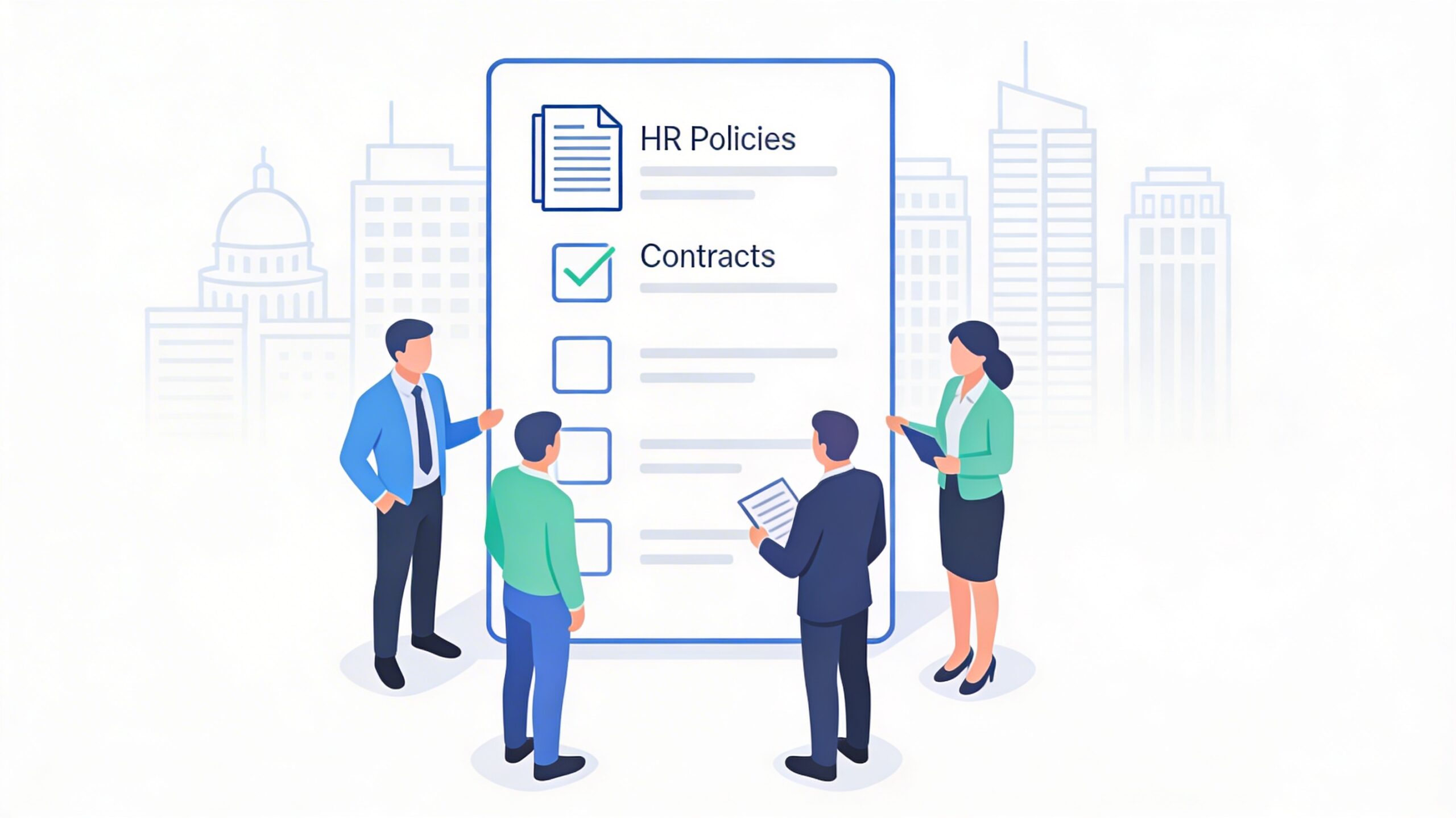
All employees hired in Lebanon should have written employment contracts. These should clearly define the job title, reporting structure, working hours, probation period, notice periods, compensation, and leave entitlements in line with Lebanese labor law. Do not rely on verbal agreements or informal arrangements, regardless of how trusted the relationship is.
The May 2025 amendments to Lebanese labor law introduced formal recognition of remote work, part-time employment, and seasonal contracts. If you are hiring for any of these arrangements, ensure your contracts reflect the updated legal framework rather than outdated templates.
Social Security and Registration Obligations
Employees hired in Lebanon must be registered with the National Social Security Fund. This covers sickness and maternity benefits, family allowances, and end-of-service indemnity. Ensure your recruitment and HR processes include clear timelines for social security registration from the first day of employment.
End-of-Service Indemnity
Lebanese labor law requires employers to pay end-of-service indemnity to employees upon termination in most circumstances. This is a significant financial obligation that should be factored into your workforce planning and cost modeling, not treated as a surprise at the time of departure.
Working with TREX Lebanon’s HR consultancy team ensures your recruitment and employment practices remain aligned with current Lebanese labor law, reducing legal and financial exposure as your team grows.
Taking the Next Step with Recruitment Services in Lebanon
Recruitment in Lebanon, done properly, is one of the most valuable investments a Lebanese SME can make. The right people, hired through a structured process, with clear expectations and proper legal agreements, produce better business results and lower long-term people costs.
Done poorly, recruitment in Lebanon is an ongoing drain on management time, budget, and organizational energy.
TREX Lebanon supports Lebanese businesses with recruitment services, HR consultancy, and workforce planning designed specifically for the Lebanese market. Whether you need help building a repeatable hiring process, finding the right candidates for a critical role, or ensuring your employment practices are legally sound, TREX provides grounded, practical expertise.
Ready to build a stronger recruitment process for your Lebanese team? Contact TREX Lebanon today to discuss your hiring needs and how professional recruitment services can help.